
Terrazzo Floor Restoration & Polishing
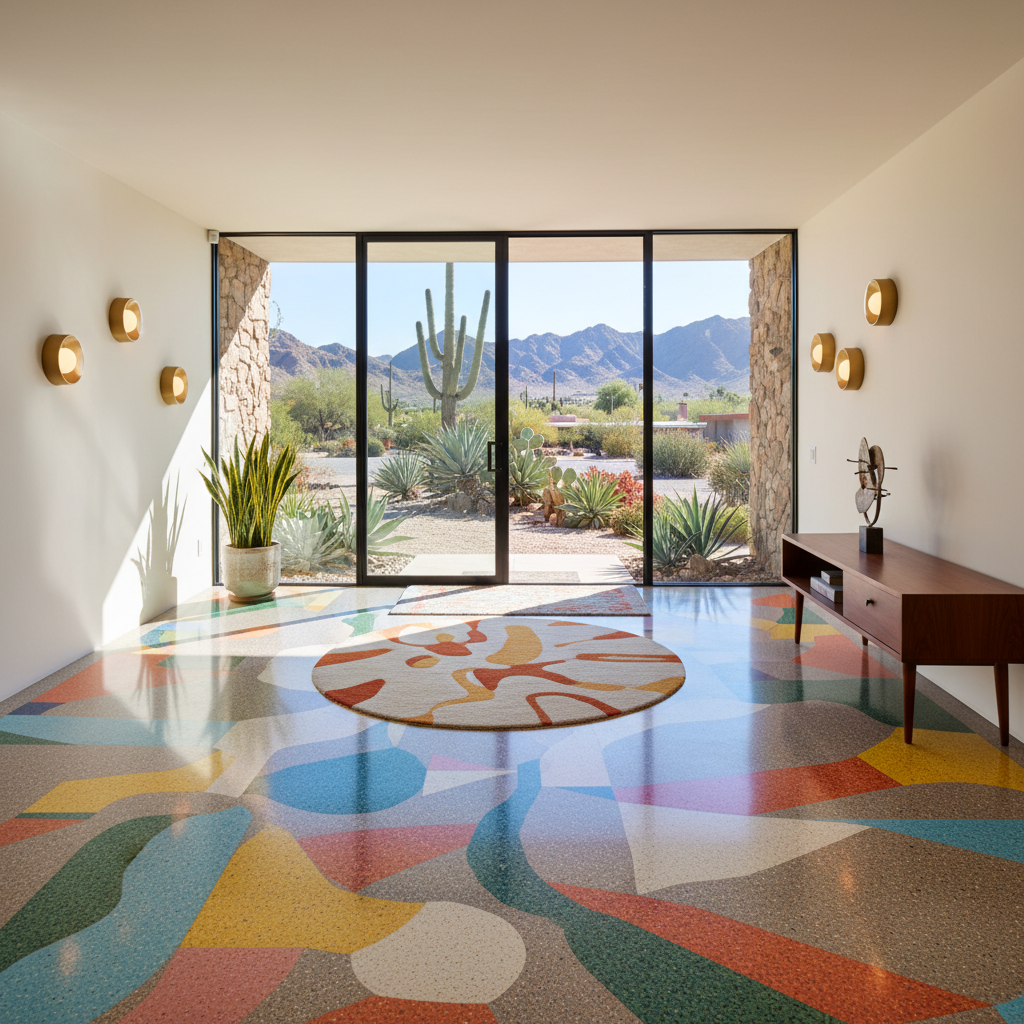
Terrazzo is a composite material made by embedding chips of marble, granite, quartz, or glass into a cement or epoxy base. When properly restored, it produces one of the most visually striking floor finishes available — a smooth, seamless mosaic of embedded stone that catches light beautifully.
Once considered dated, terrazzo is now one of the most sought-after flooring materials in modern design. If you have original terrazzo hiding under carpet or tile, or existing terrazzo that's lost its shine under decades of wax, professional restoration can transform it into a showpiece.
Our Terrazzo Services
| Service | What's Involved | Starting Price |
|---|---|---|
| Light polish (good condition) | Cleaning, polishing, sealing | $5-$8/sqft |
| Standard restoration | Wax removal, grinding, honing, polishing, sealing | $8-$15/sqft |
| Heavy restoration | Crack repair, deep grinding, divider strip repair, polishing, sealing | $15-$20/sqft |
| Crack and chip repair | Routing, color-matched epoxy fill, surface polish | $200-$500 per area |
| Divider strip replacement | Remove and replace damaged zinc or brass strips | $10-$20/linear ft |
| Wax stripping | Chemical removal of old wax buildup | $2-$4/sqft |
| Densifier application | Lithium silicate hardener for increased durability | Included with restoration |
| Sealing | Penetrating sealer with 30-day guarantee | Included with restoration |
The Terrazzo Restoration Process
Step 1: Assessment
Evaluation of terrazzo condition, crack mapping, moisture testing, identification of terrazzo type (cementitious vs epoxy), and assessment of existing coatings.
Step 2: Wax and Coating Removal
Old wax layers are chemically stripped and extracted. This step is essential — grinding over old wax smears it deeper into the stone. Heavily waxed floors may require a full day for stripping alone.
Step 3: Crack and Chip Repair
Cracks are routed to create clean channels, then filled with color-matched epoxy resin. Chips are built up with matching aggregate material. Damaged divider strips (zinc or brass) are replaced to maintain the floor's design integrity.
Step 4: Diamond Grinding
Heavy-duty grinding machines with diamond-impregnated discs remove the top surface layer, eliminating scratches, stains, and residual coating. Multiple passes with progressively finer grits level and smooth the floor.
Step 5: Honing
Finer diamond abrasives create a smooth, uniform surface. The aggregate chips embedded in the terrazzo matrix become increasingly visible as the surrounding material is smoothed.
Step 6: Densifying
Lithium silicate densifier penetrates the terrazzo and reacts with calcium hydroxide in the cement, creating a harder, more durable surface. This step reduces porosity, improves stain resistance, and creates a better foundation for the final polish.
Step 7: Diamond Polishing
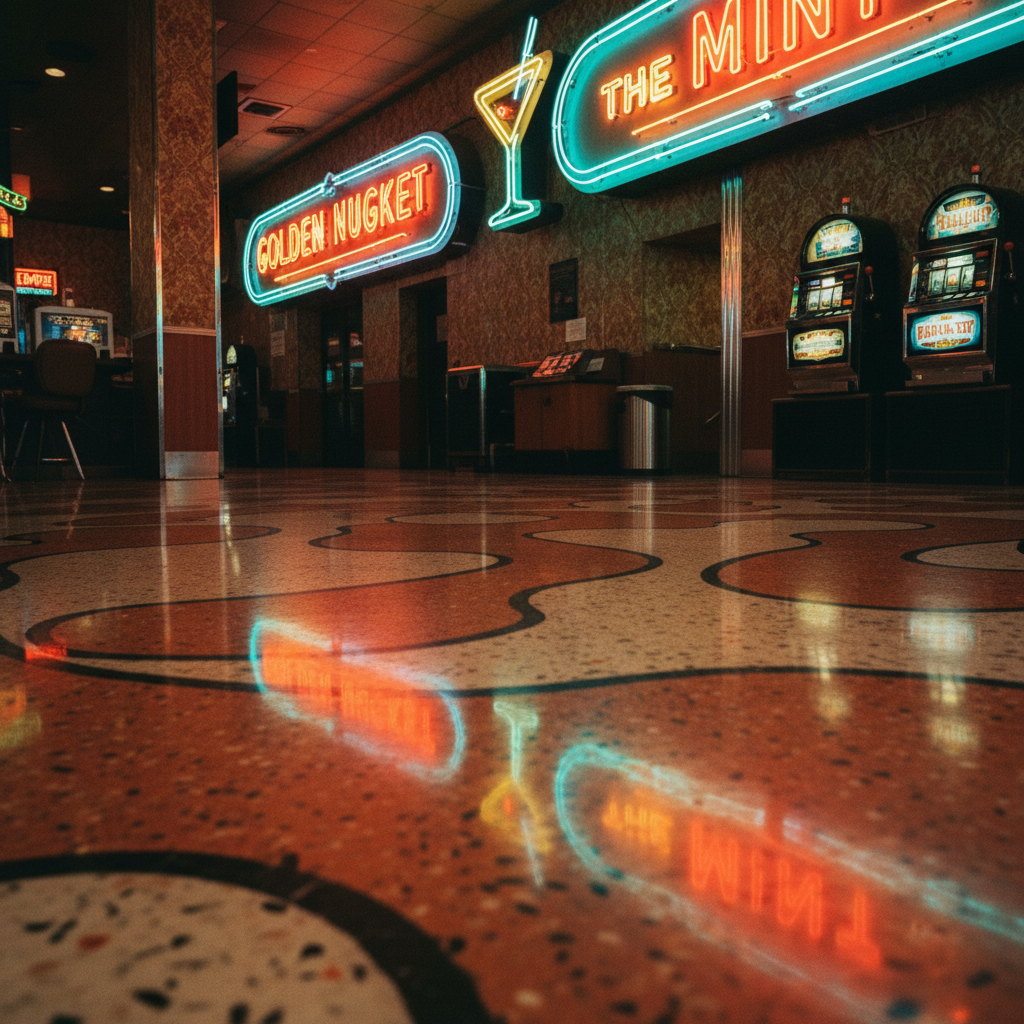
The finest diamond pads (1500-3000+ grit) bring the surface to its final shine. The embedded stone chips come alive at this stage — marble, granite, or glass aggregate creates a distinctive mosaic pattern with mirror-like reflectivity.
Step 8: Sealing
Penetrating sealer protects the freshly restored surface from stains and moisture. Backed by our 30-day guarantee.
Why Diamond Polishing Beats Wax
| Factor | Diamond-Polished Terrazzo | Wax-Maintained Terrazzo |
|---|---|---|
| Appearance | Natural depth, true stone shine | Synthetic sheen, can yellow |
| Durability | Years between services | Monthly reapplication |
| Maintenance | Simple dust mop + damp mop | Strip, reapply, buff regularly |
| Slip resistance | Better — less slippery than wax | Waxed surfaces can be slick |
| Long-term cost | Lower — fewer service visits | Higher — constant wax cycle |
| Scratch resistance | Higher — densified surface | Lower — wax layer scratches easily |
If your terrazzo has been maintained with wax, consider switching to diamond-polished maintenance after your next restoration. The upfront restoration investment pays for itself through dramatically reduced ongoing maintenance costs.
Cementitious vs Epoxy Terrazzo
- Cementitious Terrazzo (Traditional)
- Found in most pre-1970s installations. Aggregate chips set in Portland cement base. Thicker (typically 5/8" or more), heavier, and more porous. Requires careful sealing. Extremely durable when maintained — many cementitious terrazzo floors have lasted 75+ years.
- Epoxy Terrazzo (Modern)
- Standard for installations since the 1980s. Aggregate chips set in epoxy resin base. Thinner (typically 1/4" to 3/8"), lighter, and less porous than cementitious. Available in a wider range of colors. Easier to maintain but still benefits from professional polishing and sealing.
Both types respond excellently to professional diamond restoration.
Terrazzo Restoration vs Replacement
| Option | Cost Per Sq Ft | 500 Sq Ft Project | Timeline |
|---|---|---|---|
| Professional restoration | $5-$20 | $2,500-$10,000 | 2-5 days |
| New cementitious terrazzo | $25-$50+ | $12,500-$25,000+ | 3-6 weeks |
| New epoxy terrazzo | $30-$60+ | $15,000-$30,000+ | 2-4 weeks |
Restoration saves 50-80% compared to new installation. Read our complete restoration vs replacement guide.
Signs Your Terrazzo Needs Restoration
- Loss of shine even after cleaning
- Visible scratches across the surface
- Yellowed, built-up wax coatings
- Permanent stains that won't clean out
- Cracks spreading or widening
- Aggregate chips feeling rough or popping out
- Uneven wear patterns in high-traffic paths
Terrazzo Maintenance After Restoration
Daily
- Dust mop with clean microfiber to remove grit and dust
Weekly
- Damp mop with pH-neutral stone cleaner
- Dry after mopping
Monthly
- Inspect for new chips or cracks
- Check high-traffic areas for early wear signs
Annually
- Water drop test on sealer
- Professional touch-up polishing for high-traffic areas if needed
Every 3-5 Years
- Full professional restoration and resealing
Frequently Asked Questions
Q: How much does terrazzo restoration cost?
A: Light polishing starts at $5/sqft. Standard restoration runs $8-$15/sqft. Heavy restoration with crack repair costs $15-$20/sqft. Most residential projects range from $2,500 to $10,000.
Q: How long does terrazzo restoration take?
A: Two to five days for most residential projects. A single room in good condition can be done in one to two days. Floors requiring extensive wax removal and crack repair take longer.
Q: Should I wax my terrazzo after restoration?
A: No. Modern diamond-polished terrazzo is maintained without wax. Diamond polishing creates a natural shine that's harder, more attractive, and lower maintenance than wax. Wax builds up, yellows, and creates slippery surfaces.
Q: Can terrazzo cracks be repaired?
A: Yes. Cracks are routed and filled with color-matched epoxy that blends seamlessly when polished. Even extensive cracking is repairable — the only exception is structural cracking from foundation movement, which needs structural repair first.
Q: I found terrazzo under my carpet. Can it be restored?
A: Almost always yes. Terrazzo discovered under carpet, tile, or other flooring typically restores beautifully. Adhesive residue from old carpet padding is removed during the grinding phase. Book a free assessment and we'll evaluate the terrazzo's condition.
Q: Is terrazzo restoration worth it?
A: Yes. Restoration costs $5-$20/sqft vs $25-$60+/sqft for new terrazzo. The results are virtually indistinguishable from new, and restored terrazzo will last decades with proper maintenance.
Schedule Your Terrazzo Restoration
Over 20 years of terrazzo restoration experience. Professional diamond grinding and polishing equipment. 30-day sealer guarantee.
Call (702) 809-8436 for a free terrazzo assessment.
Se habla espanol: (702) 764-1528