
Limestone Floor Polishing & Care: The Complete Homeowner's Guide [2026]
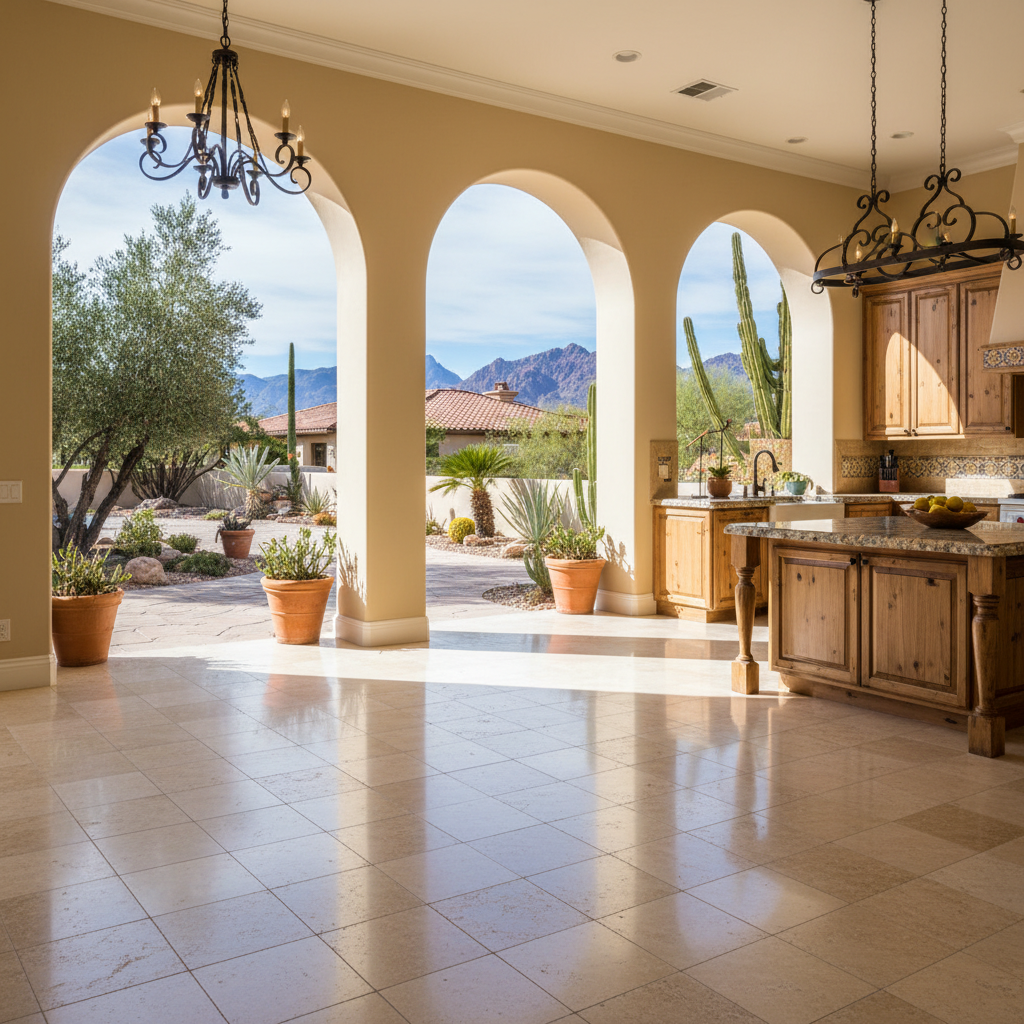
Limestone is one of the most elegant natural stones you can put in your home. Its soft, muted earth tones and subtle fossil patterns create a warmth that marble's drama and granite's boldness can't match. But that elegance comes with a tradeoff: limestone is one of the most high-maintenance natural stones you can own.
Composed primarily of calcium carbonate, limestone is soft (3-4 on the Mohs hardness scale), highly porous, and reactive to acids. It scratches easier than granite, absorbs stains faster than slate, and etches the moment vinegar, wine, or citrus juice touches it. In Las Vegas, where hard water deposits minerals into stone pores relentlessly, limestone needs consistent professional care to stay beautiful.
This guide covers everything you need to know about maintaining limestone floors — from daily habits to professional restoration.
How Limestone Differs from Other Natural Stone
| Property | Limestone | Marble | Granite | Travertine |
|---|---|---|---|---|
| Hardness (Mohs) | 3-4 | 3-4 | 6-7 | 3-4 |
| Porosity | High | High | Low-Medium | Very High |
| Acid sensitivity | High | High | Low | High |
| Scratch resistance | Low | Low | High | Low |
| Stain resistance (unsealed) | Low | Low | Medium | Very Low |
| Maintenance level | High | High | Moderate | High |
Limestone and marble are closely related — both calcium carbonate-based. The key difference: marble has been metamorphosed under heat and pressure, giving it a harder crystalline structure. Limestone retains its softer sedimentary character.
Daily and Weekly Limestone Care
Daily: Dust Mop (Non-Negotiable)
Limestone's softness means that grit and dust scratch it more easily than harder stones. In Las Vegas, fine desert dust tracked indoors acts like sandpaper under foot traffic.
- Use a dry microfiber dust mop — not a broom, which scatters fine particles
- Focus on entryways, hallways, and kitchen paths
- Takes two minutes and prevents hundreds of dollars in polishing costs
Weekly: Damp Mop with pH-Neutral Cleaner
- Use warm water with a pH-neutral stone cleaner specifically formulated for natural stone
- Wring your microfiber mop well — damp, not wet (excess water soaks into porous limestone)
- Dry the floor afterward with a clean microfiber cloth or dry mop
- In Las Vegas, drying after mopping is critical — it prevents hard water minerals from depositing on the surface as the water evaporates
Immediately: Blot All Spills
Limestone absorbs liquids faster than almost any other stone. When something spills:
- Blot immediately with a clean cloth — don't wipe, which spreads the liquid into a larger area
- Clean the spot with pH-neutral stone cleaner
- Dry completely
Highest-risk substances for limestone: Wine, coffee, citrus juice, tomato sauce, vinegar, mustard, soda. All are acidic and will etch on contact as well as stain if absorbed.
What Will Damage Your Limestone
These common products and substances cause permanent damage to limestone:
- Vinegar — the #1 internet cleaning recommendation that destroys limestone on contact
- Lemon juice or citrus cleaners — acid etches the calcium carbonate surface
- CLR, Lime-Away — dissolve the stone itself, not just mineral deposits
- Bleach — degrades sealers and can discolor limestone
- Ammonia — breaks down sealer protection over time
- Generic bathroom or kitchen cleaners — most are too acidic or alkaline
- Abrasive scrub pads, scouring powder — scratches the soft surface
- Steam mops — concentrated heat and moisture damages sealers
The safe list: pH-neutral stone cleaners, baking soda paste (for spot treatment), hydrogen peroxide 3% (for organic stains on light limestone), and distilled water.
Sealing Limestone: Your Most Important Protection
Unsealed limestone is essentially a sponge on your floor. It absorbs liquids, minerals, dirt, and oils on contact. Professional sealing fills the microscopic pores and dramatically slows absorption.
Types of Limestone Sealers
| Sealer | How It Works | Longevity | Best For |
|---|---|---|---|
| Penetrating (natural look) | Absorbs into pores, invisible barrier | 2-4 years | Most indoor limestone |
| Color-enhancing | Penetrates pores while deepening natural tones | 2-3 years | Faded or light limestone |
| Topical | Surface coating that adds sheen | 1-2 years | Low-traffic decorative areas |
How Often to Seal Limestone
| Area | Recommended Frequency |
|---|---|
| Kitchen floors and counters | Every 6-12 months |
| Bathroom floors | Every 6-12 months |
| Living areas | Every 1-2 years |
| Entryways | Every 1 year |
| Outdoor limestone | Annually |
The water drop test: Sprinkle water on your limestone. Wait 5-10 minutes. If the water absorbs and darkens the stone, it's time to reseal. If it beads on the surface, your sealer is still working. Test every 6 months.
In Las Vegas, seal more frequently than national guidelines suggest. Our 278 ppm hard water degrades sealers faster than softer water elsewhere.
Professional Limestone Restoration
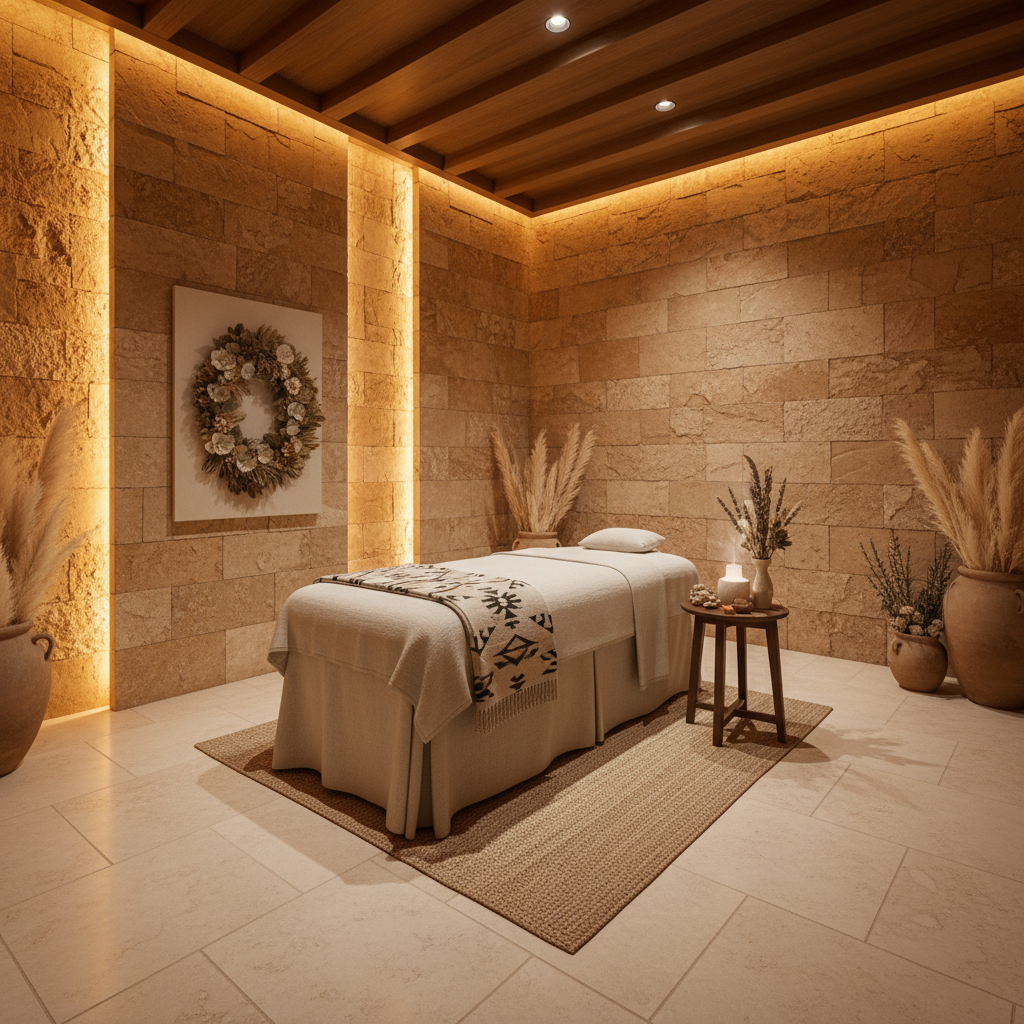
When daily maintenance and sealing aren't enough to keep your limestone looking its best, professional restoration is the answer.
What Professional Restoration Includes
- Thorough cleaning to remove all embedded dirt, mineral deposits, and old sealer
- Stain treatment with poultice extraction for deep-set stains
- Diamond honing to smooth away scratches, etching, and surface damage
- Polishing (optional) for a refined, low-sheen finish
- Sealing with professional-grade penetrating sealer
Limestone Restoration Costs
| Service | Cost Per Sq Ft |
|---|---|
| Deep cleaning + sealing | $5-$12 |
| Honing (matte restoration) | $5-$10 |
| Full polishing restoration | $6-$18 |
| Stain removal (poultice) | $100-$300 per area |
| Chip/crack repair | $150-$350 per repair |
vs Replacement: New limestone installation costs $15-$50+ per square foot. Restoration saves 60-85%.
How Often to Schedule Professional Restoration
- High-traffic kitchen and bathroom floors: Every 1-2 years
- Living areas and bedrooms: Every 2-4 years
- Low-traffic formal rooms: Every 3-5 years
- Outdoor limestone: Every 1-2 years
Common Limestone Problems and Solutions
Etching (Dull Spots)
What it looks like: Dull, rough patches where the polished surface has been dissolved by acid contact.
DIY fix: For very light etching, a marble polishing powder rubbed with a damp cloth can improve minor etch marks. For anything beyond faint marks, professional honing is needed.
Prevention: Use coasters, keep acidic foods and drinks away from limestone, and never use acidic cleaners.
Hard Water Mineral Buildup
What it looks like: Cloudy white film, especially near sinks, in bathrooms, and in kitchens.
DIY fix: pH-neutral stone cleaner with a soft nylon brush for light deposits. For heavier buildup, a stone-safe mineral deposit remover applied per product directions. Never use vinegar or acidic descalers.
Prevention: Dry wet surfaces promptly. Seal every 6-12 months. Consider a water softener if you have extensive limestone.
Stains
What it looks like: Discolored spots — dark from oil or organic materials, rust-colored from metal, pink from wine.
DIY fix: Baking soda poultice (paste applied, covered with plastic wrap, left 24-48 hours) draws stains out of the stone. May need multiple applications. Hydrogen peroxide (3%) works for organic stains on light limestone.
Professional fix: Commercial-grade poultice materials and techniques for stubborn stains. Sometimes combined with honing to remove surface-level staining.
Scratches
What it looks like: Visible lines in the polished surface, often concentrated in traffic paths.
DIY fix: Very fine scratches may be minimized with marble polishing powder. Deeper scratches require professional diamond honing.
Prevention: Daily dust mopping removes the grit that causes scratches. Felt pads under furniture legs. Door mats at every exterior entrance.
Limestone in Las Vegas: Special Considerations
Las Vegas's environment creates three specific challenges for limestone:
Hard water (278 ppm): More than double the national average. Mineral deposits build up on limestone faster here than almost anywhere else. Sealed limestone in Las Vegas needs resealing sooner than national guidelines suggest.
Desert dust: Fine Mojave particulate is mildly abrasive on limestone's soft surface. Daily dust mopping is more critical here than in humid climates where dust settles rather than blows.
Extreme heat: For outdoor limestone (patios, walkways), Las Vegas summer temperatures exceeding 110 degrees accelerate sealer breakdown. UV radiation degrades sealer chemistry. Outdoor limestone requires annual professional resealing.
Frequently Asked Questions
How much does limestone floor polishing cost?
Professional limestone polishing costs $6-$18 per square foot depending on condition. Deep cleaning and sealing runs $5-$12 per square foot. Most residential limestone projects cost $1,500-$5,000. Compare that to $15-$50+ per square foot for replacement.
Can etched limestone be fixed?
Yes. Professional diamond honing removes etch marks from the limestone surface and restores a smooth, even finish. Etching is surface-level damage that responds well to professional treatment. Light etching can sometimes be improved with DIY marble polishing powder.
How often should limestone be sealed?
In Las Vegas, every 6-12 months for kitchens and bathrooms, every 1-2 years for living areas, and annually for outdoor limestone. Our hard water degrades sealers faster than in most other cities. Use the water drop test every 6 months to check sealer status.
Is limestone a good choice for kitchens?
Limestone works in kitchens if you're committed to consistent care — immediate spill cleanup, regular sealing, and pH-neutral cleaners only. It will develop a natural patina over time that many homeowners love. If you prefer a completely pristine surface with minimal maintenance, granite or quartz may be more practical.
What's the difference between limestone and marble care?
Very similar. Both are calcium carbonate-based, acid-sensitive, and porous. The main difference: marble can be polished to a higher gloss than limestone. Care routines (pH-neutral cleaners, sealing schedules, avoiding acids) are nearly identical.
Can limestone be used outdoors in Las Vegas?
Yes, with proper maintenance. Outdoor limestone needs annual professional cleaning and resealing due to intense UV, extreme heat, and desert dust exposure. Properly sealed and maintained outdoor limestone performs well for decades.
Keep Your Limestone Beautiful
Limestone rewards consistent care with decades of understated elegance. The key is staying ahead of damage — daily dust mopping, prompt spill cleanup, regular sealing, and periodic professional restoration.
Night and Day Stone Restoration has over 20 years of experience caring for limestone floors and countertops. We understand what Las Vegas conditions do to this sensitive stone, and we know exactly how to keep it looking its best.
Call (702) 809-8436 for a free limestone assessment.
Se habla espanol: (702) 764-1528