
Limestone Cleaning, Polishing & Restoration
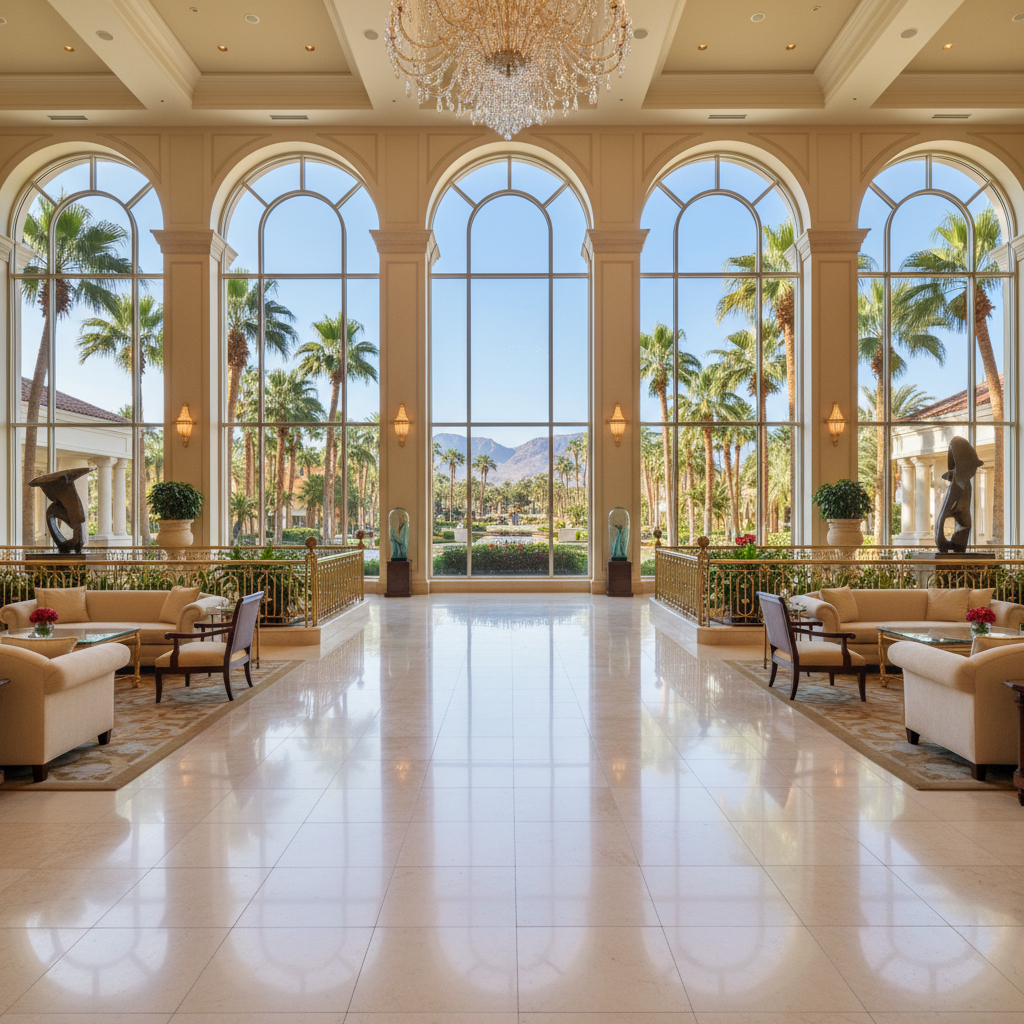
Limestone is a sedimentary rock composed primarily of calcium carbonate — the same mineral base as marble, but with a softer, more understated character. Its muted earth tones, subtle fossil patterns, and warm texture make it a popular choice for elegant, natural interiors.
Like marble, limestone is highly porous and acid-sensitive. It scratches and stains more easily than granite or slate, and it reacts to acidic substances on contact. Professional restoration and consistent sealing are essential to keeping limestone beautiful.
Our Limestone Services
| Service | What's Involved | Starting Price |
|---|---|---|
| Deep cleaning | Professional extraction to remove embedded dirt and minerals | $5-$8/sqft |
| Cleaning + sealing | Deep cleaning followed by penetrating sealer application | $5-$12/sqft |
| Limestone polishing | Diamond polishing to restore smooth, refined finish | $6-$12/sqft |
| Limestone honing | Diamond honing for matte/satin finish | $5-$10/sqft |
| Heavy restoration | Grinding + honing + polishing for severely damaged floors | $10-$18/sqft |
| Stain removal | Poultice extraction of deep-set stains | $100-$300 per area |
| Chip and crack repair | Color-matched epoxy fill and polish | $150-$350 per repair |
| Sealing (standalone) | Penetrating sealer with 30-day guarantee | $0.50-$2/sqft |
Common Limestone Problems We Solve
- Dull, worn surface from foot traffic and hard water exposure
- Etching (dull patches) from acidic spills — wine, citrus, vinegar, cleaning products
- Hard water mineral deposits that cloud the surface and penetrate pores
- Deep stains from oil, rust, organic materials, and colored liquids
- Scratches from furniture, shoes, and abrasive grit
- Efflorescence — white crystalline deposits migrating to the surface from moisture below
- Crumbling or deteriorating edges from age and moisture exposure
- Failed or discolored sealers that trap dirt and look patchy
The Limestone Restoration Process
- Assessment: Identify limestone type, evaluate damage, test existing sealer status
- Cleaning: Professional extraction to remove all surface and embedded contaminants
- Stain treatment: Poultice application for deep-set stains that cleaning alone can't remove
- Diamond honing or polishing: Progressive abrasives smooth and refine the surface to the desired finish level
- Chip and crack repair: Color-matched epoxy fills blended smooth with surrounding stone
- Sealing: Penetrating sealer applied and backed by our 30-day guarantee
Understanding Limestone
- Composition
- Primarily calcium carbonate (CaCO₃), often with fossil fragments, shell deposits, and mineral inclusions. Softer than granite (Mohs hardness 3-4 vs 6-7) and similar in hardness to marble.
- Porosity
- Highly porous — absorbs liquids more readily than granite, slate, or quartzite. Requires consistent sealing to prevent staining and mineral absorption. Hard water is particularly damaging to unsealed limestone.
- Acid Sensitivity
- Reacts to acids just like marble. Vinegar, citrus juice, wine, tomato sauce, and many household cleaners cause etching on contact. Always use pH-neutral cleaners formulated for natural stone.
- Common Varieties
- Jerusalem limestone (cream/gold), Jura limestone (beige/gray), Cotswold limestone (honey gold), travertine (technically a form of limestone with distinct characteristics). Each variety has different density and porosity levels.
Limestone Sealing: Critical Protection
Limestone's high porosity makes sealing even more important than for most other stones. Unsealed limestone absorbs stains, minerals, and moisture rapidly.
| Sealer Type | Best For | Longevity | Appearance |
|---|---|---|---|
| Penetrating (natural) | Most indoor limestone | 2-4 years | No change |
| Color-enhancing | Faded or light limestone | 2-3 years | Deepened tones |
| Topical | Low-traffic decorative areas | 1-2 years | Added sheen |
Recommended sealing frequency:
- Kitchen floors and countertops: Every 6-12 months
- Bathroom floors: Every 6-12 months
- Living areas: Every 1-2 years
- Outdoor limestone: Annually
Full sealing guide: How often to seal natural stone floors
Limestone Care Between Professional Services
Daily
- Dust mop with dry microfiber — limestone scratches easily from trapped grit
- Blot spills immediately — especially acidic liquids
Weekly
- Damp mop with pH-neutral stone cleaner and warm water
- Dry the floor completely after mopping — standing water causes mineral deposits on limestone
What to Never Use on Limestone
- Vinegar, lemon juice, or any acid-based cleaner (etches on contact)
- Bleach or ammonia (degrades sealers, can discolor)
- Abrasive scrub pads or scouring powders (scratches soft surface)
- Generic multi-surface cleaners (most are too acidic or alkaline)
For Outdoor Limestone
- Pressure washing with plain water (no chemicals) for periodic deep cleaning
- Reapply sealer annually — UV and weather degrade sealers faster outdoors
- Address moss or algae growth with stone-safe treatments before it penetrates pores
Limestone vs Similar Stones
| Factor | Limestone | Marble | Travertine |
|---|---|---|---|
| Hardness | Soft (3-4 Mohs) | Soft (3-4 Mohs) | Soft (3-4 Mohs) |
| Porosity | High | High | Very High |
| Acid sensitivity | High | High | High |
| Appearance | Muted, earthy, fossil patterns | Veined, translucent depth | Warm, textured, porous |
| Best for | Elegant, understated interiors | Dramatic, luxurious spaces | Southwest, Mediterranean design |
| Maintenance | High | High | High |
All three are calcium-based stones requiring similar care: pH-neutral cleaners, prompt spill cleanup, and regular professional sealing.
Restoration vs Replacement
| Option | Cost Per Sq Ft | 300 Sq Ft Area | Timeline |
|---|---|---|---|
| Professional restoration | $5-$18 | $1,500-$5,400 | 1-2 days |
| Limestone replacement | $15-$50+ | $4,500-$15,000+ | 2-3 weeks |
Restoration saves 60-85% compared to replacement. Full analysis: Stone restoration vs replacement guide
Frequently Asked Questions
Q: How much does limestone restoration cost?
A: Limestone cleaning and sealing costs $5-$12/sqft. Full polishing restoration runs $6-$18/sqft depending on condition. Most residential projects range from $1,500 to $5,000.
Q: Is limestone durable enough for kitchen floors?
A: Limestone is softer than granite and will show wear over time, but it's absolutely viable for kitchen floors with proper sealing and maintenance. Many homeowners accept the natural patina that develops as part of limestone's character. Regular professional maintenance keeps it looking elegant.
Q: How do you remove stains from limestone?
A: Surface stains are removed with pH-neutral stone cleaners. Deep-set stains require a poultice — a paste that draws the stain out of the stone over 24-48 hours. For stubborn stains, professional extraction is the most effective approach. See our hard water stain removal guide.
Q: Can etched limestone be restored?
A: Yes. Professional diamond honing removes etch marks from the limestone surface, and polishing restores the original finish. Etching is surface-level damage that responds well to professional treatment.
Q: How often should limestone be sealed?
A: Every 6-12 months in kitchens and bathrooms, every 1-2 years in living areas, and annually for outdoor limestone. Hard water environments require more frequent sealing. Full sealing schedule.
Q: What's the difference between limestone and marble?
A: Both are calcium carbonate-based, but marble has been metamorphosed under heat and pressure, giving it a harder crystalline structure and the ability to take a high-gloss polish. Limestone retains its sedimentary character with visible fossils and a more muted, earthy appearance. Care requirements are nearly identical.
Schedule Your Limestone Restoration
Over 20 years of natural stone restoration experience. Professional diamond equipment. 30-day sealer guarantee.
Call (702) 809-8436 for a free limestone assessment.
Se habla espanol: (702) 764-1528