
Granite Sanding, Polishing & Repair
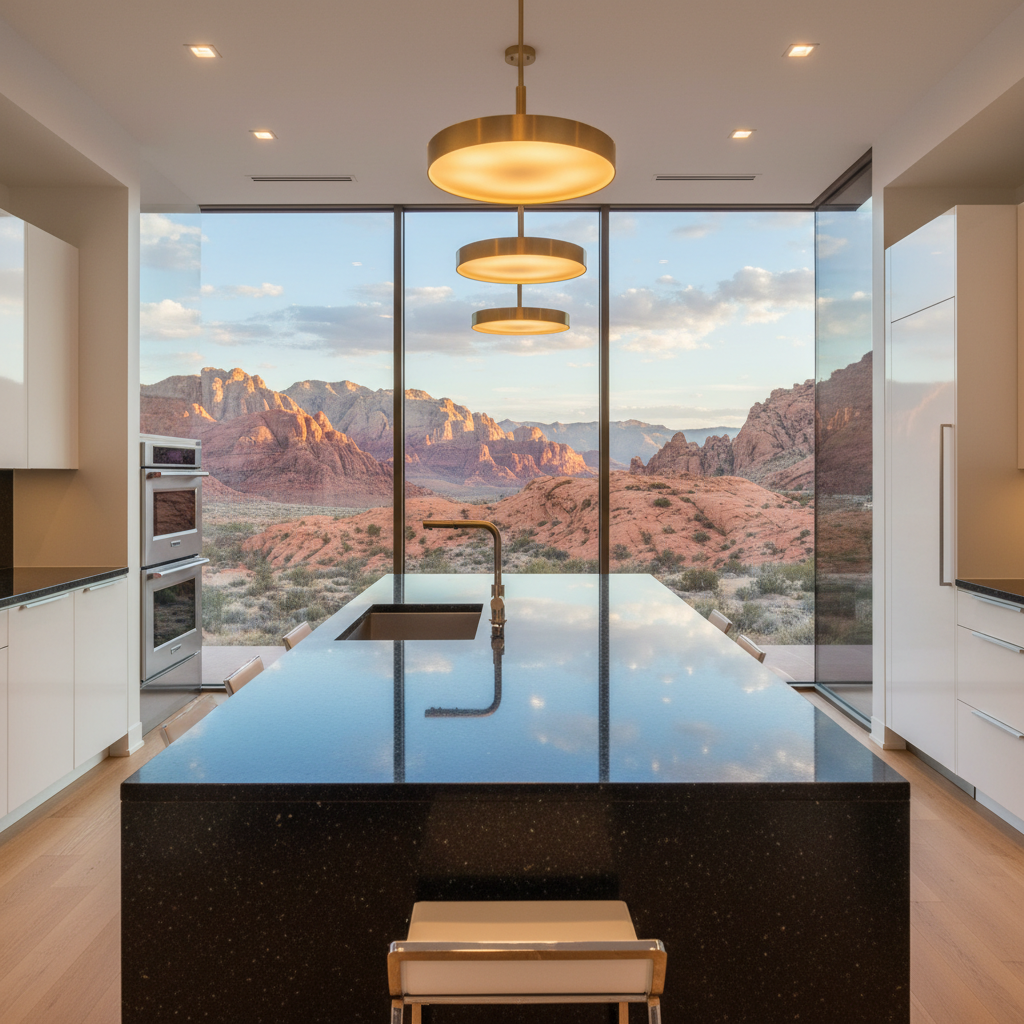
Granite is one of the hardest natural stones used in residential and commercial settings. Its silicate-based composition makes it significantly more scratch-resistant and stain-resistant than marble or travertine. But even granite loses its polish over time — daily use, hard water deposits, and abrasive grit gradually dull the finish.
Professional diamond sanding and polishing restores granite floors and countertops to their original luster. Chips and cracks are filled with color-matched epoxy that cures to blend invisibly with the surrounding stone.
Our Granite Services
| Service | What's Involved | Starting Price |
|---|---|---|
| Granite floor polishing | Diamond polishing to restore uniform shine | $3-$10/sqft |
| Granite sanding (heavy restoration) | Diamond grinding to remove deep scratches and unevenness | $6-$12/sqft |
| Countertop polishing | Hand-held diamond polishing for kitchen and bath counters | $300-$600 |
| Chip repair | Color-matched epoxy fill, reshape, and polish | $150-$350 per chip |
| Crack repair | Epoxy injection, optional reinforcement, surface polish | $200-$600 per crack |
| Granite sealing | Penetrating sealer with 30-day guarantee | Included with restoration |
| Stain removal | Professional extraction of deep-set stains | $100-$300 per area |
The Granite Restoration Process
- Assessment: Our technician identifies the granite type, evaluates damage, and determines the correct diamond grit progression
- Surface preparation: Cleaning to remove dirt, old sealers, and contaminants
- Diamond sanding: Coarse diamond pads remove scratches, etching, and unevenness from the surface
- Progressive honing: Medium-grit diamonds smooth the sanded surface, eliminating sanding marks
- Diamond polishing: Fine-grit diamonds bring the surface to a high-gloss or satin finish
- Chip and crack repair: Color-matched epoxy fills, shapes, and polishes to match surrounding stone
- Sealing: Penetrating sealer protects against stains and moisture absorption
Common Granite Problems We Solve
- Dull, worn finish from years of foot traffic and cleaning
- Surface scratches from furniture, grit, and heavy use
- Hard water mineral film that clouds the natural shine
- Chips on countertop edges (typically from dropped cookware)
- Cracks from impact, thermal shock, or structural settling
- Stains from oil, wine, rust, and organic materials that penetrated unsealed granite
- Uneven seam lines where countertop sections meet
Understanding Granite Types
- Igneous Granite (True Granite)
- Formed from cooled magma. Extremely hard and dense. Includes varieties like Black Galaxy, Giallo Ornamental, and Moon White. Highly scratch-resistant and typically requires less frequent sealing.
- Metamorphic "Granite" (Gneiss)
- Technically gneiss, not granite — but commonly sold as granite. Includes varieties with prominent veining. Slightly softer than true granite but still very durable. May require more careful handling during restoration.
- Engineered Quartz
- Not natural granite but often grouped together. Made from 90-95% crushed quartz with resin binders. Non-porous, doesn't require sealing. We restore scratched and dull quartz surfaces using specialized techniques different from natural granite.
Granite Care Between Professional Services
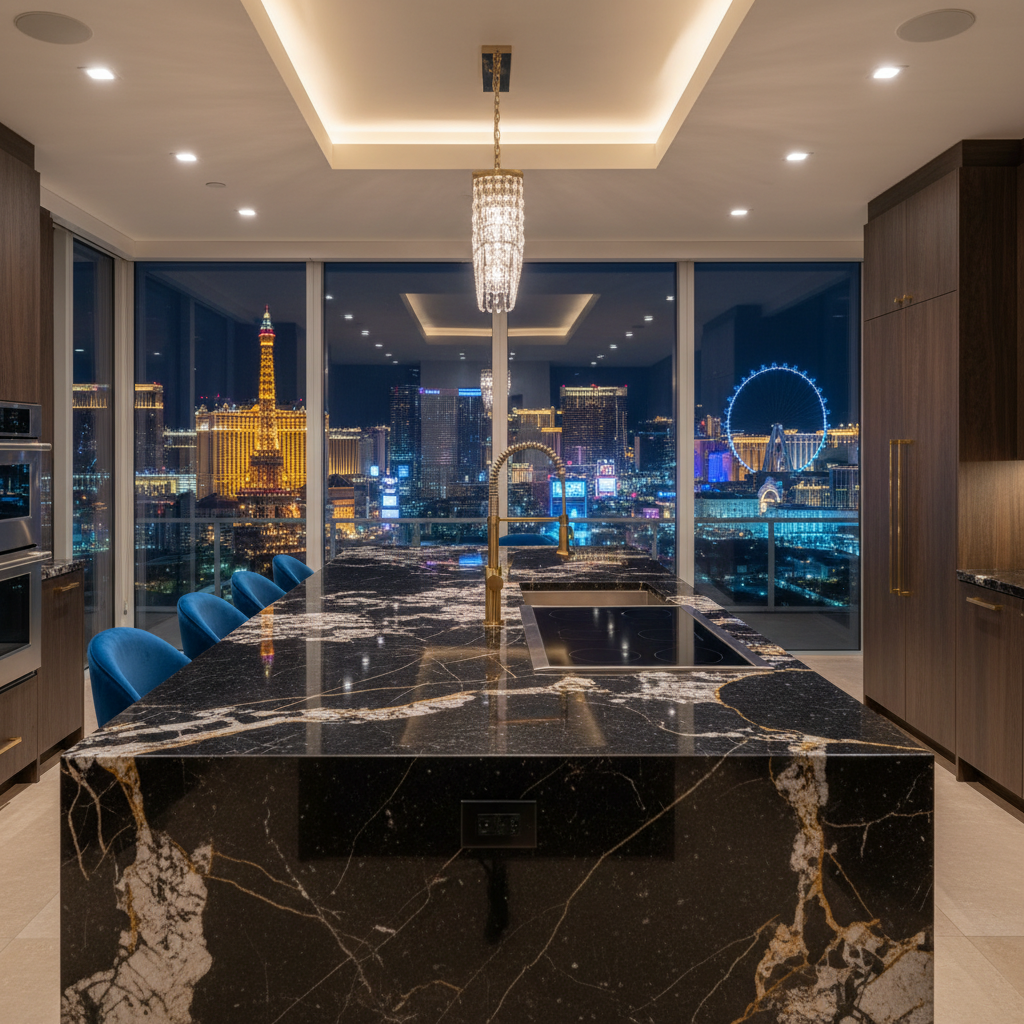
Daily Maintenance
- Sweep or dust mop to remove abrasive grit and dust
- Wipe countertops with a soft cloth after food preparation
- Blot spills promptly (especially oil-based substances)
Weekly Cleaning
- Damp mop floors with a pH-neutral stone cleaner
- Clean countertops with mild dish soap and water or a stone-specific cleaner
- Dry surfaces after cleaning to prevent water spots
What to Avoid
- Vinegar and citrus-based cleaners (less damaging than on marble, but still degrades sealers)
- Abrasive scrub pads and scouring powders
- Generic kitchen and bathroom cleaners
- Standing on countertops (concentrated weight can cause cracking)
- Placing extremely hot cookware directly on granite (use trivets)
DIY vs Professional Granite Repair
| Factor | DIY | Professional |
|---|---|---|
| Cost | $15-$75 (repair kit) | $150-$600 (per repair) |
| Color match quality | Generic tints, often visible | Custom-mixed, virtually invisible |
| Durability | 1-3 years | 5-15 years |
| Best for | Hidden chips, temporary fixes | Visible damage, permanent repairs |
| Risk | Poor color match looks worse than chip | Minimal with experienced technician |
For small, inconspicuous chips, DIY kits can work. For visible front-edge chips, cracks, or any damage you'll see daily, professional repair delivers dramatically better results.
Restoration vs Replacement
| Option | Average Kitchen Countertop | Average Floor (300 sqft) | Timeline |
|---|---|---|---|
| Restoration | $300-$600 | $900-$3,000 | Same day to 1 day |
| Replacement | $2,000-$5,000+ | $3,000-$15,000 | 1-3 weeks |
Full comparison: Stone restoration vs replacement cost guide
Frequently Asked Questions
Q: How much does granite polishing cost?
A: Granite floor polishing costs $3-$10 per square foot depending on condition. Countertop polishing runs $300-$600 per countertop. Heavy restoration with deep sanding costs $6-$12 per square foot.
Q: Does granite need to be sealed?
A: Most granite benefits from sealing, though some very dense varieties are naturally stain-resistant. The water drop test tells you: sprinkle water on the surface and wait 10 minutes. If it absorbs and darkens the stone, sealing is needed. Learn more in our stone sealing frequency guide.
Q: Can chipped granite countertops be repaired?
A: Yes. Professional repair uses color-matched epoxy that blends invisibly with the surrounding granite. Repairs last 5-15 years under normal use. See our granite countertop repair guide for details.
Q: How often should granite be polished?
A: Granite floors in high-traffic areas benefit from professional polishing every 2-3 years. Lower-traffic areas can go 3-5 years. Countertops may need attention every 1-2 years depending on use.
Q: What causes granite to lose its shine?
A: The most common causes are hard water mineral deposits, accumulated micro-scratches from daily use, and degraded sealers. Professional polishing removes all of these and restores the original finish.
Q: Is granite harder than marble?
A: Yes. Granite scores 6-7 on the Mohs hardness scale, while marble scores 3-4. This makes granite significantly more scratch-resistant and more durable for high-traffic areas and kitchen countertops.
Schedule Your Granite Restoration
Night and Day Stone Restoration has over 20 years of experience restoring granite floors and countertops. Professional-grade diamond equipment. 30-day sealer guarantee on every application.
Call (702) 809-8436 for a free granite assessment.
Se habla espanol: (702) 764-1528